Origins

Exploring legend, myth, symbology and storytelling, Origins is a series expressing some key concepts that have influenced society across time. Depicting legends that have these potential Euhemeristic origins, myth and symbols which have acted as metaphor through history, the artworks look to combine these ideas from cultures across the world with the human form to revisit our connection to these often ancient stories.

“All our knowledge has its origins in our perceptions.” ~ Leonardo da Vinci
Garden of Eden, Origins series

Garden of Eden
Model: Charlotte Parker
Photographer: Emma Fay

The Garden of Eden artwork explores the Christian idea of an original paradise that has been lost. The concept plays with a hidden reality, that our natural world and bodies have remained in and in separable to a natural paradise of the planet Earth and all its life, with the representation of the human idea and striving for the ‘fruit of knowledge’ being the cause of all suffering.

Dreamtime
Model: Helen Claire
Photographer: Jonathan Macauley

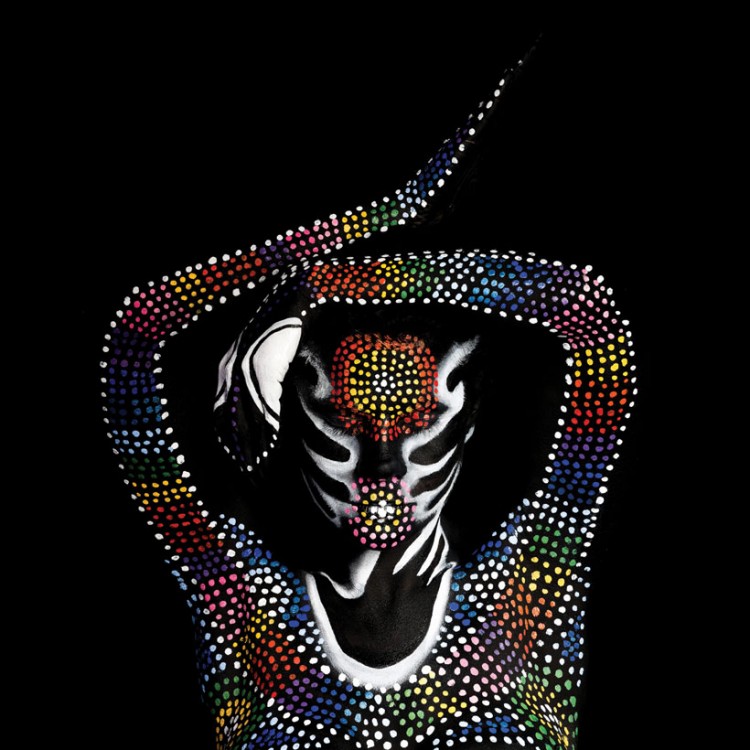
Dreamtime (or The Dreaming) stories tell of the great spirits and totems during creation, in animal and human form that moulded the barren and featureless earth. The Rainbow Serpent came from beneath the ground and created huge ridges, mountains, and gorges as it pushed upward. The Rainbow Serpent is understood to be of immense proportions and inhabits deep permanent waterholes and is in control of life’s most precious resource, water. In some cultures, the Rainbow Serpent is considered to be the ultimate creator of everything in the universe.

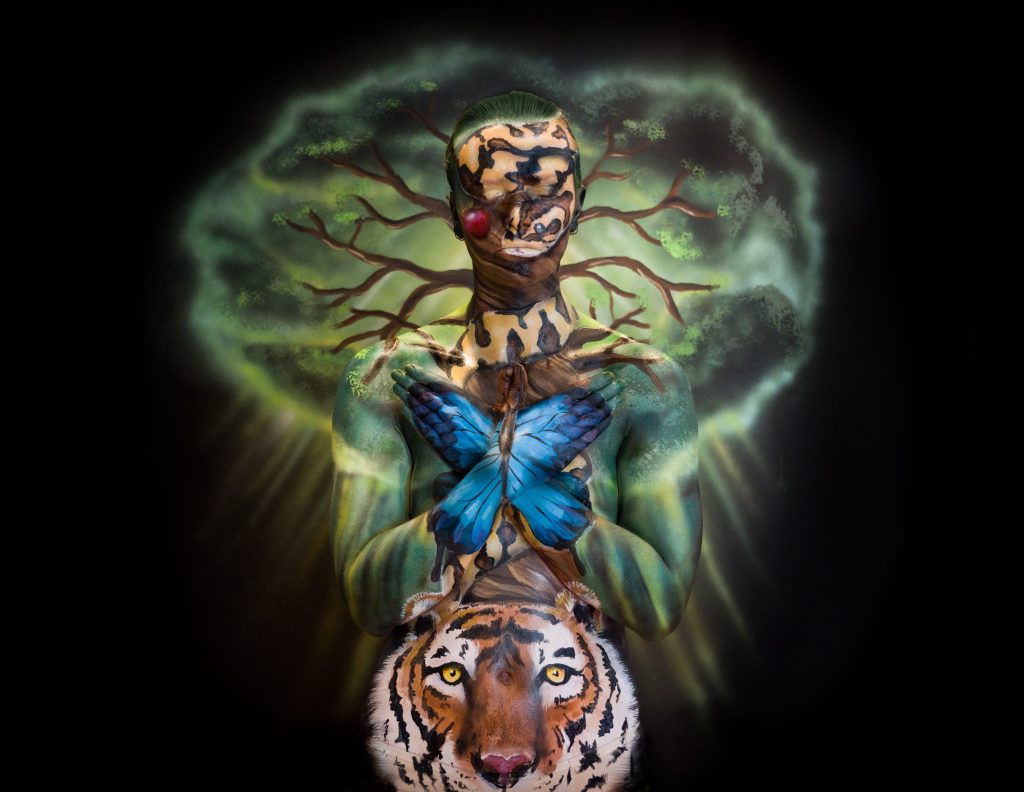
Axis Mundi
Model: Alice Buck
Photographer: Jonathan Macauley

The Axis Mundi, World Tree; the centre of everything, a point of connection

“Look, here is a tree in the garden and every summer it produces apples, and we call it an apple tree because the tree “apples.” That’s what it does. Alright, now here is a solar system inside a galaxy, and one of the peculiarities of this solar system is that at least on the planet earth, the thing peoples! In just the same way that an apple tree apples!”~ Alan Watts

World bearer

World Bearers
Model: James Kerr
Photographer: Emma Fay

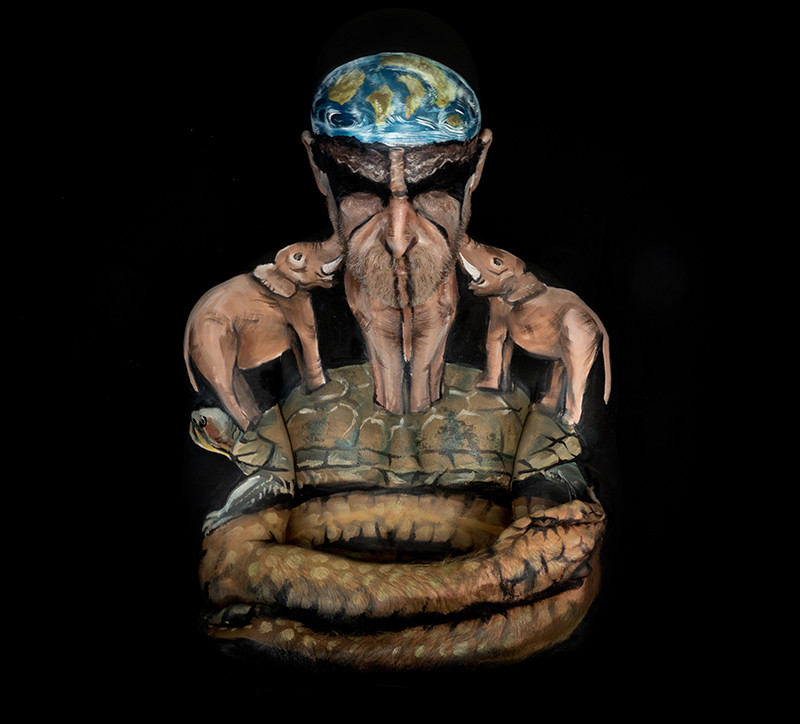
The mytheme of a giant turtle or tortoise supporting or containing the world occurs in Hindu mythology, in Chinese mythology and in Native American mythology. Classical Sanskrit literature has references to “World-Elephants” as mythical animals supporting the world in Hindu cosmology. Mythological world-bearers such as the World Turtle (Kurmaraja) and World Serpent (Nagaraja or Shesha) may have led to the world-elephant, with the Sanskrit noun Nāga having the dual meaning of “serpent” and “elephant” (named for its serpent-like trunk,) various Hindu myths speak of the world being carried or enclosed by either a tortoise, a serpent or an elephant.

Distorted stories
Model: James Kerr
Photographer: Jonathan Macauley

The Minoan civilization, represents the first advanced civilization in Europe, leaving behind massive building complexes, tools, artwork, undeciphered writing systems, and a massive network of trade. Knossos, a Minoan palace in Crete, frequently depicted bulls in wall-paintings and in the form of artefacts (like bull-shaped drinking vessels), believing to link it to later Greek myths, which told of the palace ruled by King Minos, whose wife Pasiphaë had fallen in love with a bull. From their unholy union the Minotaur was born, who was kept locked away in a labyrinth built underneath the palace.

Zodiac
Model: Josh Ward and Stefan Grundy
Photographer: Jonathan Macauley

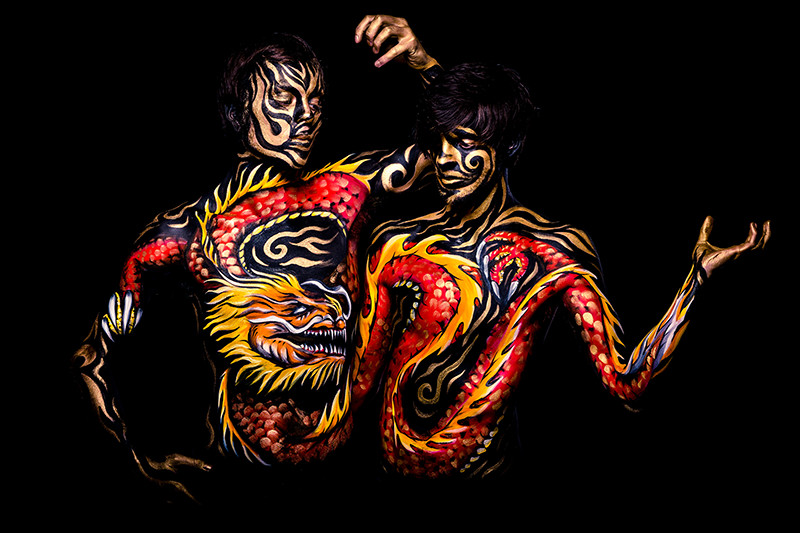
Appearing in the folklore of many cultures around the world, the large serpent dragon often has vague origins. The Chinese dragon is the highest-ranking creature in the Chinese animal hierarchy. There are typically marked spikes in the birth rates of countries that use the Chinese zodiac or places with substantial Overseas Chinese populations during the year of the Dragon, because such “Dragon babies” are considered to be lucky and have desirable characteristics that supposedly lead to better life outcomes. The relatively recent phenomenon of planning a child’s birth in the Dragon year has led to hospital overcapacity issues and even higher infant mortality rates toward the end of these years due to strained neonatal resources.

Persona
Models: Charlotte Parker and Philip Kingsley-Elton
Photographer: Jonathan Macauley

A persona (plural personae or personas), in the word’s everyday usage, is a social role or a character played by an actor. The word is derived from Latin, where it originally referred to a theatrical mask.

“All the world’s a stage, and all the men and women, merely players: They have their exits and their entrances, And one man in his time plays many parts”
~ William Shakespeare

Artemis

Archetype
Model: Helen Claire

“Because of its monthly cycle, the Moon is also a symbol of time; it reflects our ability to feel connected with the past, responsive to the present, related to ordinary life and capable of interacting with others on an earthy and human level.”

Moon Goddess and Wild huntress Artemis, was described as the mistress of beasts, untameable and the Eternal Virgin, her archetypal predisposition was toward egalitarian-brotherly relationships with men, a sense of sisterhood with women, the ability to aim for a distant target or rise to a challenge and a preference to be in nature.

Mandala
Model: Georgina Elsom

Photographer: Jonathan Macauley

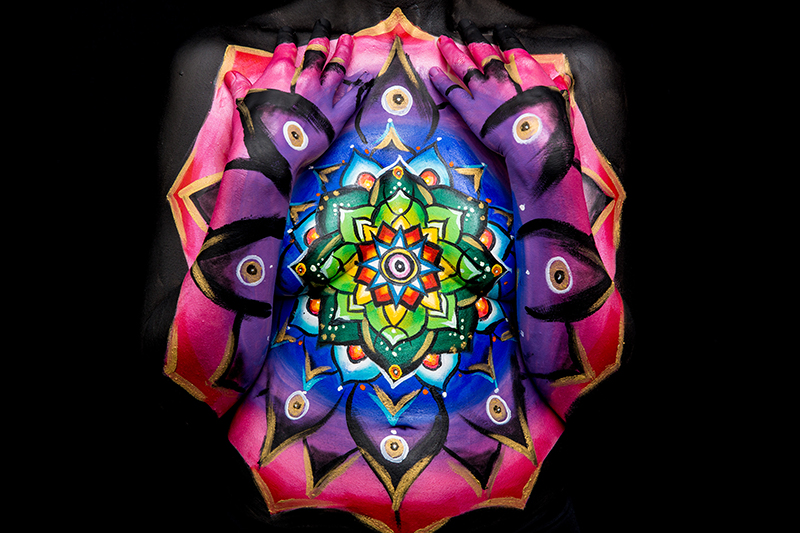
A mandala (Sanskrit literally meaning “circle”) is a geometric configuration of symbols. In various spiritual traditions, mandalas may be employed for focusing attention of practitioners and adepts, as a spiritual guidance tool, for establishing a sacred space and as an aid to meditation and trance induction.

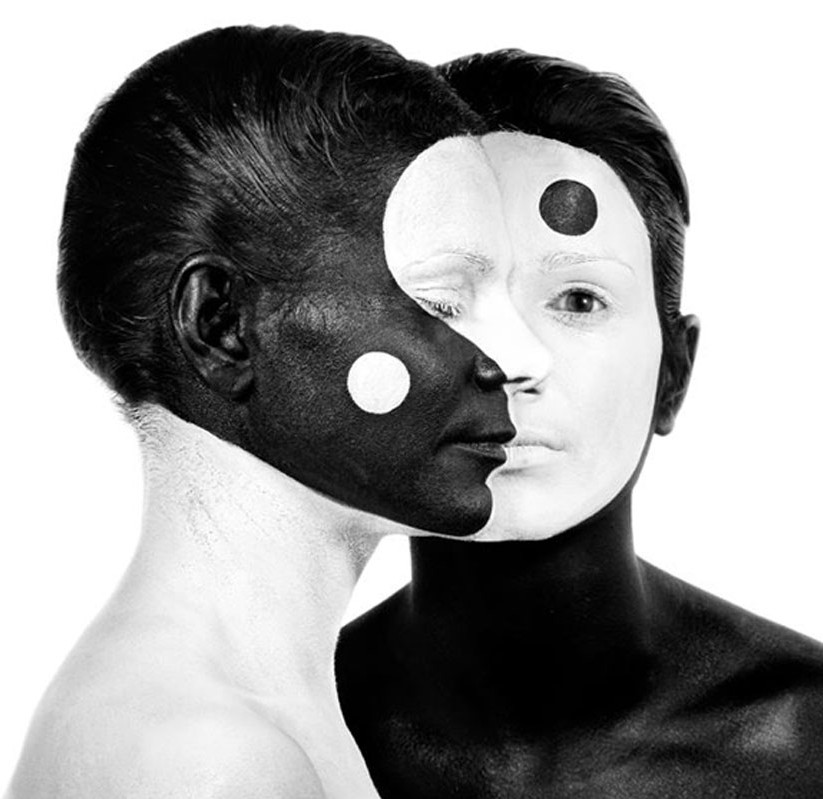
Polarity

Polarity
Models: Helen Claire and Charlotte Mahdoodi

Photographer: Jonathan Macauley

“At the very roots of Chinese thinking and feeling there lies the principle of polarity, which is not to be confused with the ideas of opposition or conflict. In the metaphors of other cultures, light is at war with darkness, life with death, good with evil, and the positive with the negative, and thus an idealism to cultivate the former and be rid of the latter flourishes throughout much of the world. To the traditional way of Chinese thinking, this is as incomprehensible as an electric current without both positive and negative poles, for polarity is the principle that + and —, north and south, are different aspects of one and the same system, and that the disappearance of either one of them would be the disappearance of the system.” ~ Alan Watts