Mon Couer
Mon Couer seeks to explore the notions of love and relationships from different cultures around the world.


Mon Couer seeks to explore the notions of love and relationships from different cultures around the world.

You give me butterflies
Model: Charlotte Parker
The term ‘Butterflies in the stomach’ describes an overwhelming excitement when you see someone you have feelings for; or when someone you love kisses or touches you.
The artwork pays homage to the style of artist Henry Rousseau.

“Colpo di fulmine. The thunderbolt, as Italians call it. When love strikes someone like lightning, so powerful and intense it can’t be denied. It’s beautiful and messy, cracking a chest open and spilling their soul out for the world to see. It turns a person inside out, and there’s no going back from it. Once the thunderbolt hits, your life is irrevocably changed.”― J.M. Darhower, Sempre
Le coup de foudre, which literally translates to “a bolt or flash of lightning, or a thunderbolt” has a common figurative meaning in French: “love at first sight,” which delivers a kind of shock


Heartstrings
Model: Josh Ward
Photographer: Jonathan Macauley
Tug at your heartstrings; to prompt strong feelings of affection or sympathy.

Tu me manques
Model: Charlotte Mahdoodi
Photographer: Jonathan Macauley
Translated from English to French, ‘I miss you’ becomes ‘Tu me manques’. Reversing the translation, ‘Tu me manques’ is redefined as ‘You are missing from me’
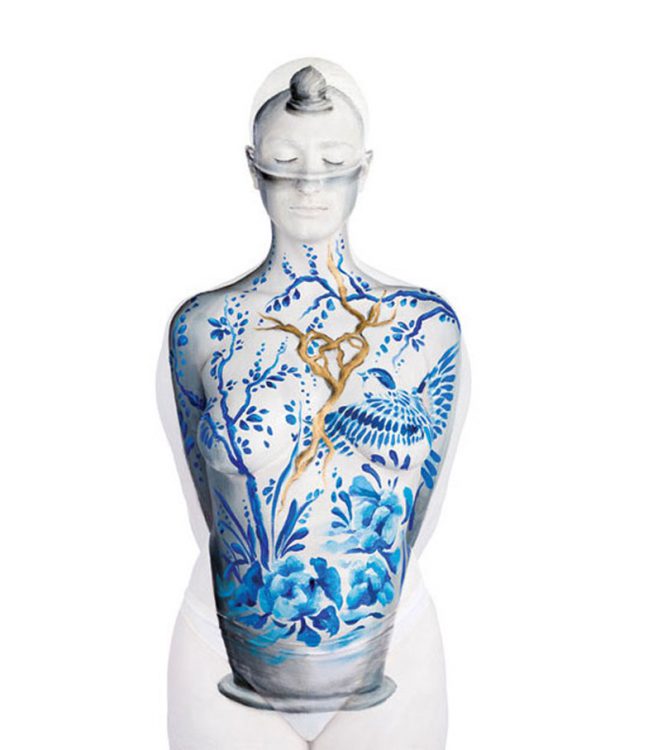
Kintsugi
Model: Charlotte Mahdoodi
Photographer: Jonathan Macauley
Kintsugi – The Japanese use gold to mend cracks in their pottery, memorialising flaws through the acceptance and appreciation of history and age.

Upside down
Model: Charlotte Mahdoodi
Photographer: Jonathan Macauley
The term, ‘You turn my world upside down’ is often meant with positive associations, like the thrill of falling in love—but can sometimes be negative, describing unwanted change.
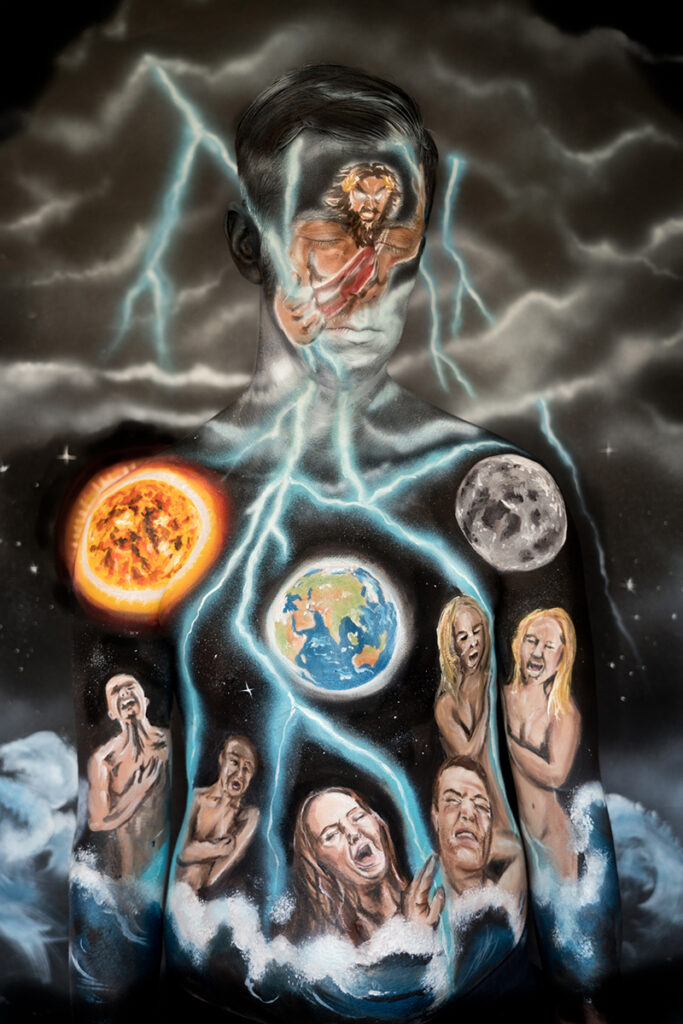
Other half
Model: Joe Capella
Greek philosopher Plato wrote the ‘symposium’, a text in which speeches are given in praise of Eros, the God of love and desire. The fourth speech is from Aristophanes, who tells a comic, fantastical story about how humans were at one time two people conjoined, but this was seen as threatening to the gods, so Zeus cut everyone in half. This text is believed to have led to the romantic notion that Love is the desire we have to find our other half, in order to become whole.